Pages

Wednesday, 2 May 2012

BMW Z8 by Senner Tuning


Benno Senner of Senner Tuning AG, Ingelheim, and his crew have released their take on the BMW Z8 sports car.
The 5.0 liter V8 engine was fitted with a sports air filter set. Then parameter adjustment followed, including the exhaust system balancing featuring a welded exhaust manifold with a stainless steel silencer and flame tubes designed with metal catalysts. This all adds 50hp to the stock 400hp and a total amount of 535Nm. The increase enabled the tuner to raise the maximal possible speed to over 300km/h.
The wheel-tire combination added to the Z8 are Work Schwert SC1 wheels in Diamond Black varnish with an anodized 9×19 and 10×19 inch chrome outer rims, and Continental Sport Contact 5P 255/40R19 and 285/35R19 tires. To compensate for the fact that RunFlat tires were mounted on non-emergency run-flat wheels, the tool kit was complemented with a tire-repair set and a compressor. A glance through the wheel provides a view of Racing Gold varnished brake calipers.

Review BMW Z4 with new twin turbo N20 engine


For over a decade, only one premium automaker has offered a four-cylinder in the U.S. And while the recent rise of Audi in the States isn’t solely because of its 2.0T engine, it’s obvious that luxury buyers are finally coming around to the idea of a fuel-sipping four-pot. As a matter of fact, they’re starting to demand it. AndBMW is heeding the call.
Name:  2012-bmw-z4-four-cylinder---06a.jpg<br />Views: 9046<br />Size:  94.2 KB
Next year, BMW will begin offering its turbocharged and direct-injected 2.0-liter inline four-cylinder engine on the 3 Series and 5 Series, matching Audi car-for-car in the entry-level and mid-size segments. But before the sedans arrive on U.S. shores – nixing the naturally aspirated 3.0-liter inline-six in the process – BMW is slipping its TwinPower four-cylinder into an unlikely host: the 2012 Z4 sDrive28i.
Why unlikely? Just look at the length of that hood. It was designed from the onset to house one of BMW’s venerable inline six-cylinder engines, but by lopping off two cylinders, BMW almost made a front-midship roadster.
2012 BMW Z4 sDrive28i 2.0-liter four-cylinder TwinPower engine
The mounting points used to fit the outgoing six-cylinder and the current turbocharged 3.0-liter are the same that hold this TwinPower turbo four in place. The byproduct is an impressive weight balance of 47.3/52.7 front-to-rear, an improvement – depending on your perspective – from the 47.9/52.1 of the six-cylinder model.The new N20 four-cylinder is the first engine to benefit from BMW’s recently revealed modular engine program, and it’s the same mill we sampled earlier this year in the not-for-U.S.-consumption X1 xDrive28i. Power remains almost unchanged in the Z4, with 240 horsepower coming on between 5,000 and 6,500 RPM and 260 pound-feet of torque available from 1,250 and 4,800 revs. While the new N20 is down by 15 hp compared to the six, torque output is up some 40 lb-ft. And the extra juice is evident the moment you mash the throttle.
2012 BMW Z4 sDrive28i side profile view
Fitted with the six-speed manual, BMW claims the Valvetronic-equipped four will hit 60 mph in 5.5 seconds, while the new eight-speed automatic gearbox does the deed in 5.6 seconds – a decrease of 0.1 and 0.4 seconds, respectively, over the six-cylinder. And as you’d expect, overall weight is down as well, with the new four-cylinder Z4 tipping the scales at 3,252 pounds, or about 33 pounds less than the outgoing sDrive28i.
Predictably, that minimal weight loss can’t be felt from behind the wheel, but the extra grunt is front and center. There’s a hint of turbo lag below 2,000 rpm when you’re lining up for a pass, but as soon as the single, twin-scroll turbo starts huffing and puffing, the Z4 accelerates more authoritatively than the six. Driving the old and new models back-to-back, we also noticed slightly less dive and squat from the mildly reworked suspension (BMW isn’t saying what’s been done, aside from tweaking the springs and shocks for the new weight balance), but that’s probably more a product of the box-fresh four-cylinder compared to the slightly abused previous generation tester.
2012 BMW Z4 sDrive28i interior
2012 BMW Z4 sDrive28i tachometer
    
2012 BMW Z4 sDrive28i steering wheel detail
    
2012 BMW Z4 sDrive28i shifter
We also sampled both the manual ‘box and new eight-speed automatic transmission, and while we’re partial to choosing our own ratios through the slick stick, the auto’s quick changes and steering wheel-mounted paddle shifters trade a modicum of engagement for a healthy dose of convenience. It’s one of the few times we wouldn’t fault buyers for choosing the slush box, and considering the average Z4 owner, we’re sure it’ll be the most popular transmission.
Naturally, you want numbers, but BMW is only giving one for now: $48,650 (plus $875 for destination). That’s an increase of $1,200 over the outgoing model, but for 2012, Bluetooth and USB integration, along with trunk-through loading and an alarm system, all come standard, so the price bump is nearly a wash with the new equipment. As for the other figures you’re after, well, BMW isn’t giving up fuel economy estimates just yet. With the (surprisingly abrupt) start-stop system fitted to the Z4 sDrive28i, BMW claims that fuel efficiency is up by 20 percent over the six-cylinder in the EU test cycle, but that could go either up or down when the EPA estimates arrive later this year. Figuring the outgoing model managed 18/28 mpg city/highway, it’s safe to assume the four-cylinder should ring in around 22 mpg in the city and 33 on the highway.
2012 BMW Z4 sDrive28i rear 3/4 view
More importantly, the character of the Z4 is completely unaffected by the new engine. The six’s sonorous tones have been replaced with a hint of turbo whistle and a thrum from the exhaust, but the overall experience remains surprisingly unchanged. Grunt is up, fuel consumption is down and top-down cruising is just as good as it ever was. The replacement for displacement is here, and if it’s executed this well, we’ll gladly give up a liter or two for the privilege.

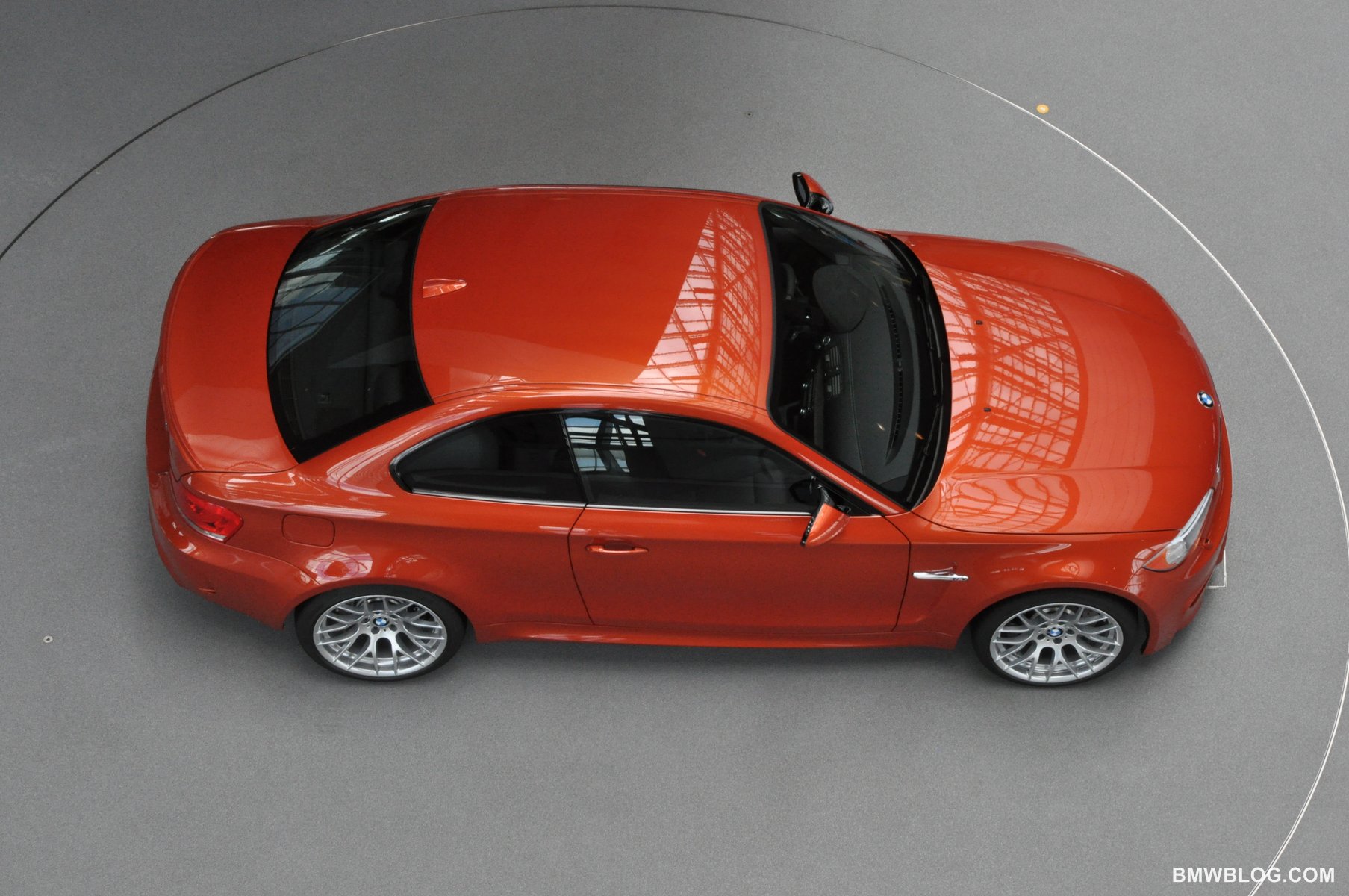
News Video 1M M3 M5 M6 Z-M X-M Blog Your M Cars Merchandise Specs 2011 BMW 1 Series M Coupe


While we’re having fun with our BMW 1M in Germany, we thought another review of the new “baby-M” might be in order. Automobile Magazine and Jason Cammisa give us an unusual, yet fun review of the 1M.
Before jumping into the review, here are some of the 1M highlights previously reported. The 1M is not only a truncated M3 Competition Package with a manual, but also an E30 M3 soul successor.
The 1M is powered by the N4 twin-turbocharged 3.0-liter I-6 engine. For the 1M, the turbocharger, exhaust system, and ECU have been revised to produce 335 horsepower and 332 pound-feet of torque, though up to 369 pound-feet are available temporarily in overboost mode. Redline is found at 7000 rpm.
The development time of the engine was very short – engineers took only about a year to build it if not less, beginning in October 2009.

Hartge Tuned BMW 1M coupe with 401 HP


Hartge our favorite germen tuner of BMW M cars have released a tuned version of the 1M. After a ECU tune up the 1M delivers 401 HP instead of the 335 HP it standard delivers. The tuned version also delivers a lot more torque (around 15% more).
Sadly no new 0-100 kmh time was set, but Hartge claims that 0-200 kmh (that 0-124 mph) is done in 11,34 seconds, thats 2,18 faster than the standard 1M. Luckily there were no big visual changes to the car, a vew subtle aerodynamic parts, including a roof and trunck spoiler.
A new exhaust system was fitted to let the car breath a little more. We think these small tuning modefications are very well done, the cars looks clean, mean and fast. In fact a standard e92 M3 will have a serious problem against it. Thumbs up for the Hartge tuned 1M.

Nissan GT-R Track Pack (2012 onwards)


Driven
What -
 Nissan GT-R Track Pack 2012
Date - April 2012
Where - Silverstone, England
Price - £84,480
Available - Now
Key rivals - Porsche 911 Turbo
Summary - A touch less weight and some neat detail changes enhance track ability even further.

Read another Nissan car review

First drive: Nissan GT-R
We like - Awesome performance, terrific chassis, not terrifying to drive.
We don't like - Bland interior, ugly exterior, few opportunities to exploit performance.
First Impressions
The Nissan GT-R is the supercar that gets petrolheads terribly excited. It's a pure technofest, the automotive equivalent of those Japanese car radios that do so many things you simply give up because you can't work out the control logic - or even see the miniscule buttons.
Here Nissan has rammed in four-wheel-drive, a mighty twin turbo V6 and electronics that simply boggle the brain. It is, as everyone tiresomely points out, quicker around the Nurburgring than anything Porsche builds, and all for a price of £75k. And you can drive it to the shops.
It's a pure technofest
Since the 2009 launch the GT-R has had a couple of power upgrades, taking it to 550hp in 2012. That still doesn't stop the tuning shops offering owners more, so Nissan has taken the fight to them with the £10,000 Track Pack option.
That gets special six-spoke RAYS alloy wheels with gloss black centres, saving 10kg. The rear seats are junked (though bizarrely it still looks pretty comfy in the buckets that are left behind) for another 10kg off.
The suspension is harder and there are extra brake cooling ducts to lower temperatures of the discs by 100 degrees during circuit use. There are no changes to the engine, though.
Nissan GT-R (© Nissan)
Performance
Just once in a lifetime you have to get behind the wheel of a GT-R. The performance goes beyond the regular dictionary of superlatives. With a six-speed dual clutch transmission, it's not even difficult to extract the maximum. Just slip it into auto and floor the pedal.
It takes off like a fighter plane, a never-ending stream of power until, well, close to 200mph. Or so it says in the specs. Even on Silverstone I never got close to that, so wet was the circuit throughout the test session.
It takes off like a fighter plane, a never-ending stream of power until, well, close to 200mph
The story is that this new 2012 engine has a good bit of additional torque over the 2011 model, that it's noticeable if you jump from one car to another. But there's wasn't the opportunity, car- or weather-wise, here.
Fast drivers won't bother with the Auto transmission mode, sticking with the paddle shifters behind the wheel. It's super-fast on the changes, though the reality is that short-shifting well below the rev limit provides you with all the performance you're likely to want on the road. Try hard, though, and 62mph is reached in, wait for it, 2.8 seconds.
Ride and handling
Acknowledging that 550hp is genuinely enough for anyone, the focus with the Track Pack is on the chassis. The springs are noticeably stiffer in the hardest of the three settings, though there's still a reasonably comfortable mode for road use.
Putting all this power down on a dry road is normally handled with utter ruthlessness via the four-wheel drive. What impresses at Silverstone is the manner in which the GT-R handles wet surfaces so ably.
The tail will step out but the electronic safety net continuously tweaks the brakes and throttle to draw the big Nissan quickly back into line. It flatters the driver in the way all these systems do, though whether the result is a real measure of your driving prowess is more open to question.
This Track Pack GT-R should have been better today than a regular GT-R. To be honest, the conditions were such that I've no idea if it really is. But I reckon there are plenty of people prepared to spend another £10k simply for the implied promise.
Nissan GT-R (© Nissan)
Interior
What a dull place the GT-R is to sit. Instead of trying to emulate its more luxurious rivals, Nissan has taken 'Dashboard No 6' out of the box and fitted it here. It all works of course, and there are a hell of a lot of dials, but it feels no classier than a 370Z.
There are a hell of a lot of dials, but it feels no classier than a 370Z
The two seats are covered in 'magic cloth'. Unique to the Track Pack, the blue-on-grey sports seats have special stiction properties to keep you in place during hard cornering and braking. They are superb. The 2012 updates of the regular GT-R - more comfortable seat belts, an enhanced Bose audio system, and a rear-view camera - are all present here too.
Economy and safety
The GT-R's combined economy figure of 24mpg is pretty damned good for a supercar, although petrol cars with turbo engines do tend to show up well in these tests.
Nissan is a major manufacturer, so although there are no EuroNCAP safety test results to go on, there's a good complement of airbags and, of course, great brakes and chassis safety features.
Nissan GT-R (© Nissan)
The MSN Cars verdict
This is a tricky one, because we never got to fully appraise the GT-R Track Pack in conditions where we could properly evaluate the chassis changes.
But the GT-R is a five-star performance machine in anyone's book. It's hard to say whether the extra £10k is money well spent. Then again, why buy a car that can go this fast unless you use it on a track?

Read another Nissan car review

First drive: Nissan GT-R

MSN Cars' best sportscars
NEED TO KNOWNISSAN GT-R TRACK PACK
Engine, petrol3.8 V6 Twin turbo
Power, hp550
Torque, lb ft466
0-62mph, secs2.8
Top speed, mph196
Mpg combined24
CO2, tax275/35

Click and Get the latest vehical of the week